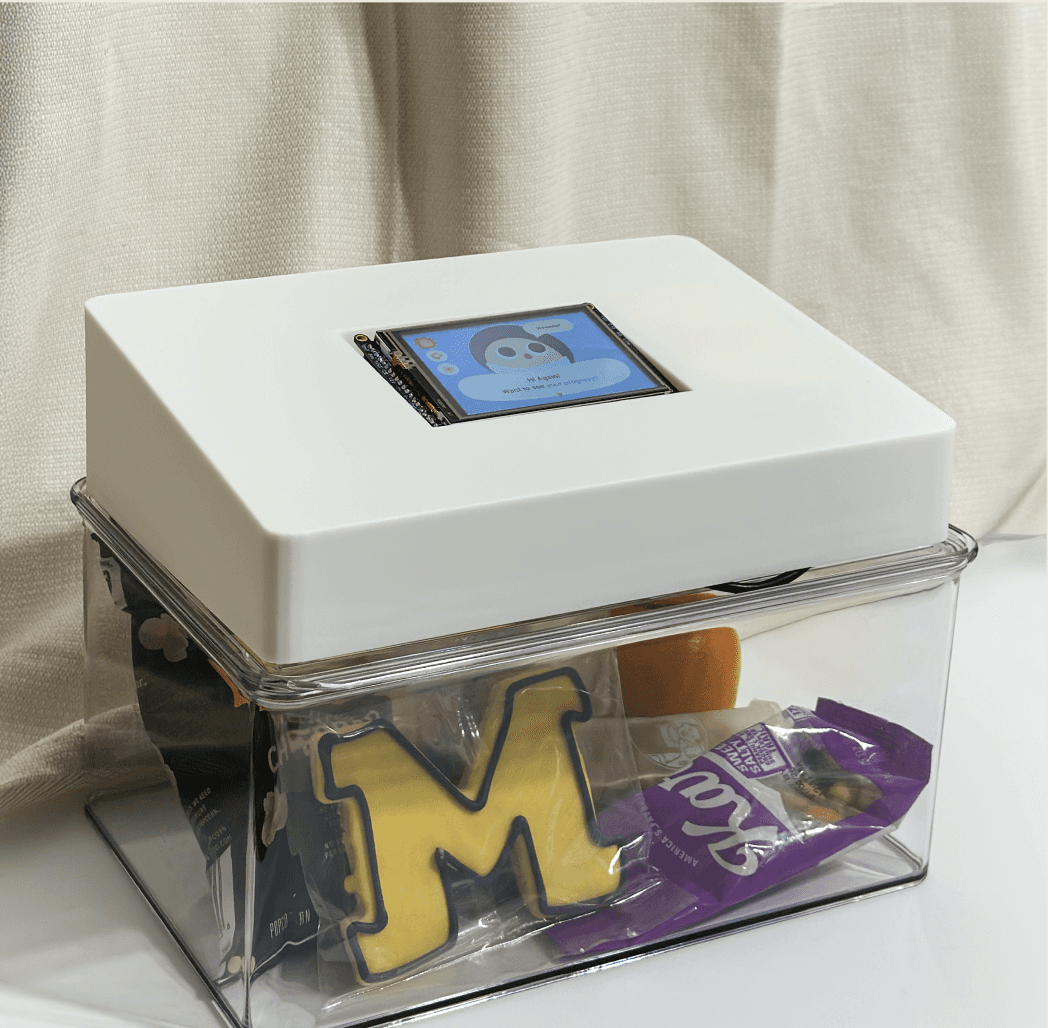
Overview
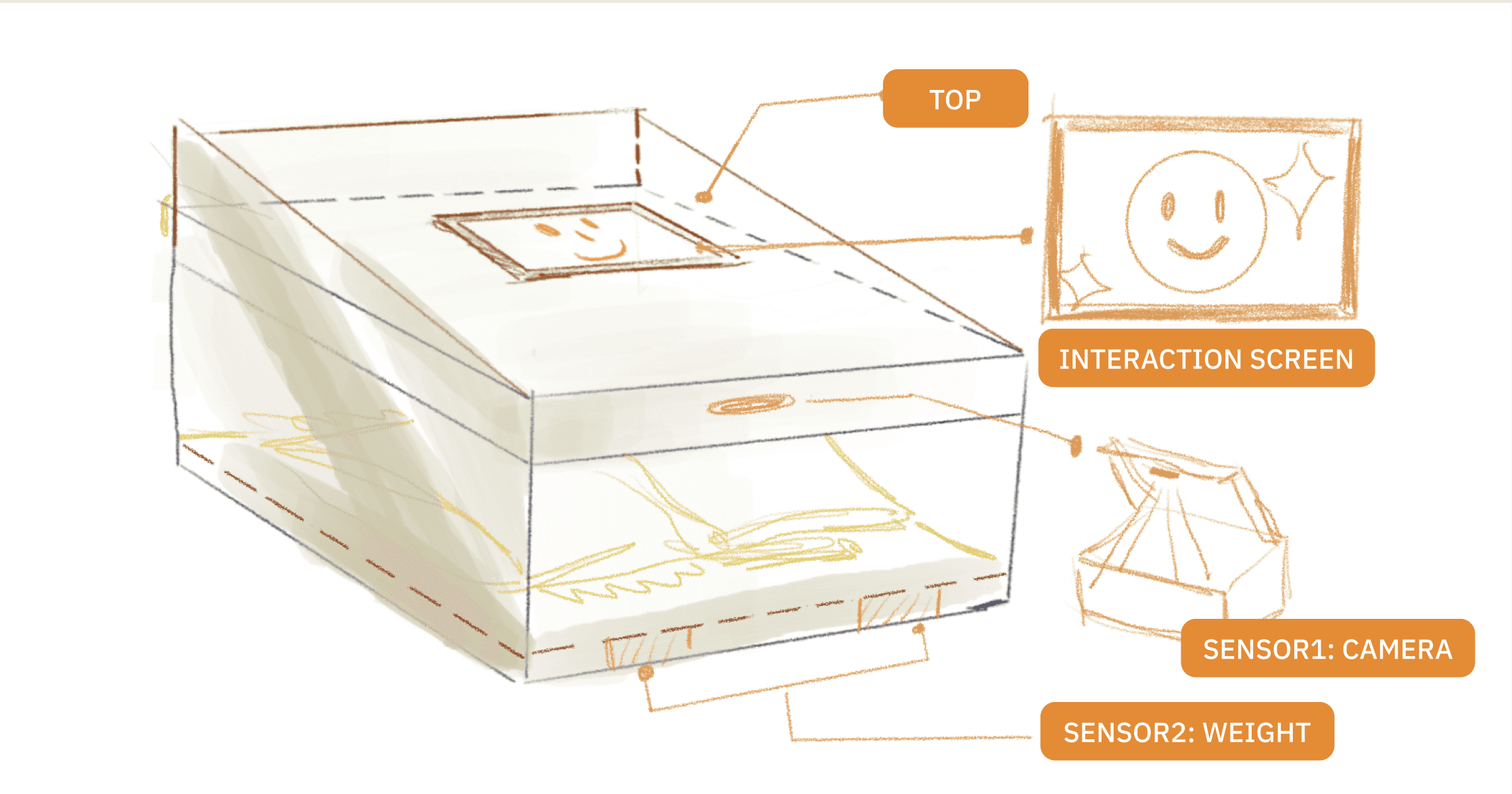
Smart Snack Box is designed for remote workers, health-conscious individuals, and snack lovers who struggle with portion control and mindless eating. By transforming a simple container into an interactive feedback tool using weight sensors, cameras, and friendly prompts, Smart Snack Box fosters healthier snacking habits without judgment.
Key features include:
Real-time weight detection and nutritional feedback
Encouraging snack buddy personalization and goal setting
Gamified motivation and progress tracking
Subtle emotional nudges to curb overconsumption
This system bridges the gap between intention and action by gently guiding users toward more balanced habits without disrupting their environment or workflow.
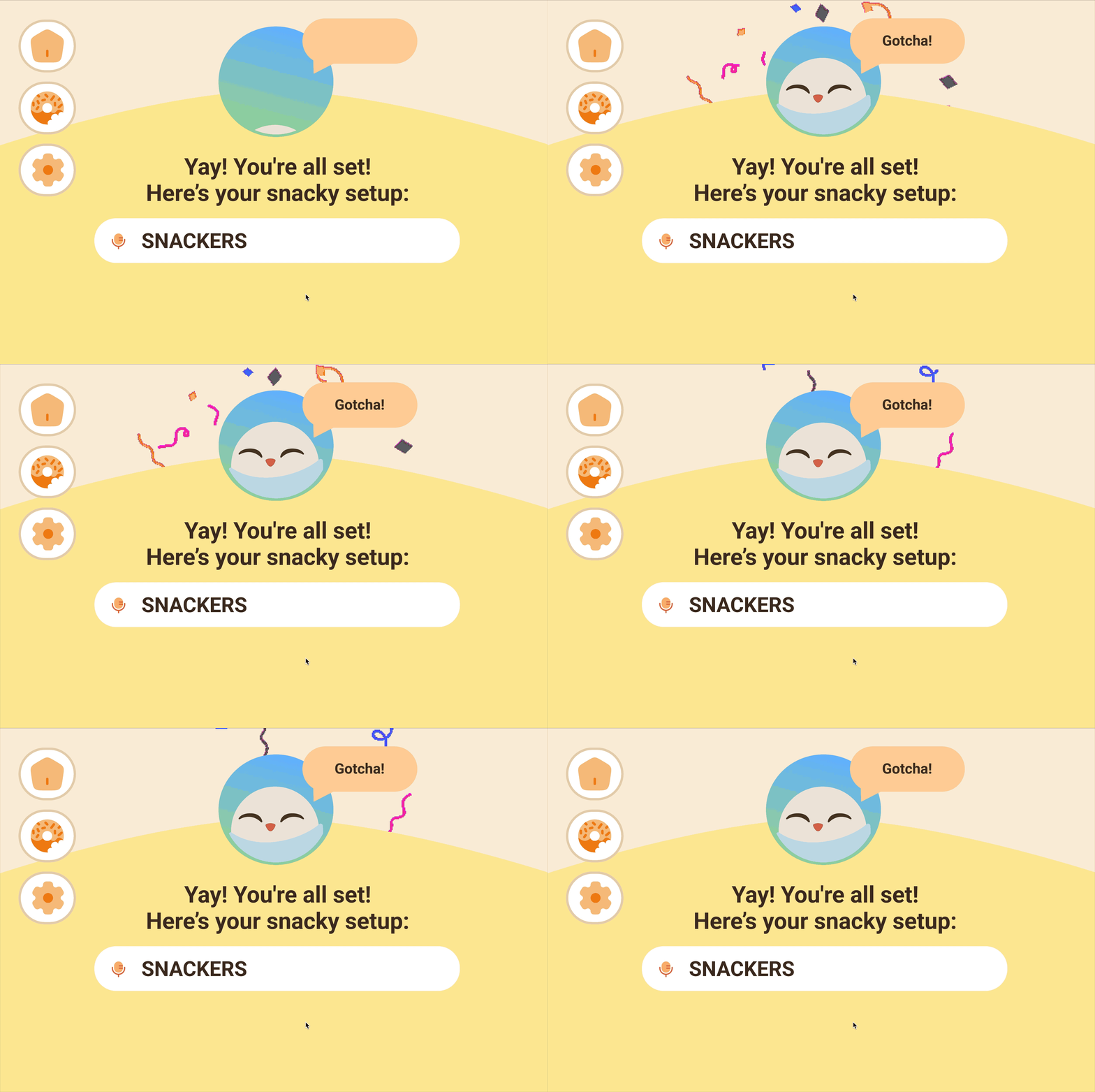
Users frequently engage in mindless snacking driven by emotions (stress, boredom, fatigue) and contextual cues (visible, easily accessible snacks), yet they rarely track their intake or have tools to help them manage these behaviors. How might we integrate supportive, real-time feedback into everyday environments so users can manage snacking behavior more effectively?
Solution Preview

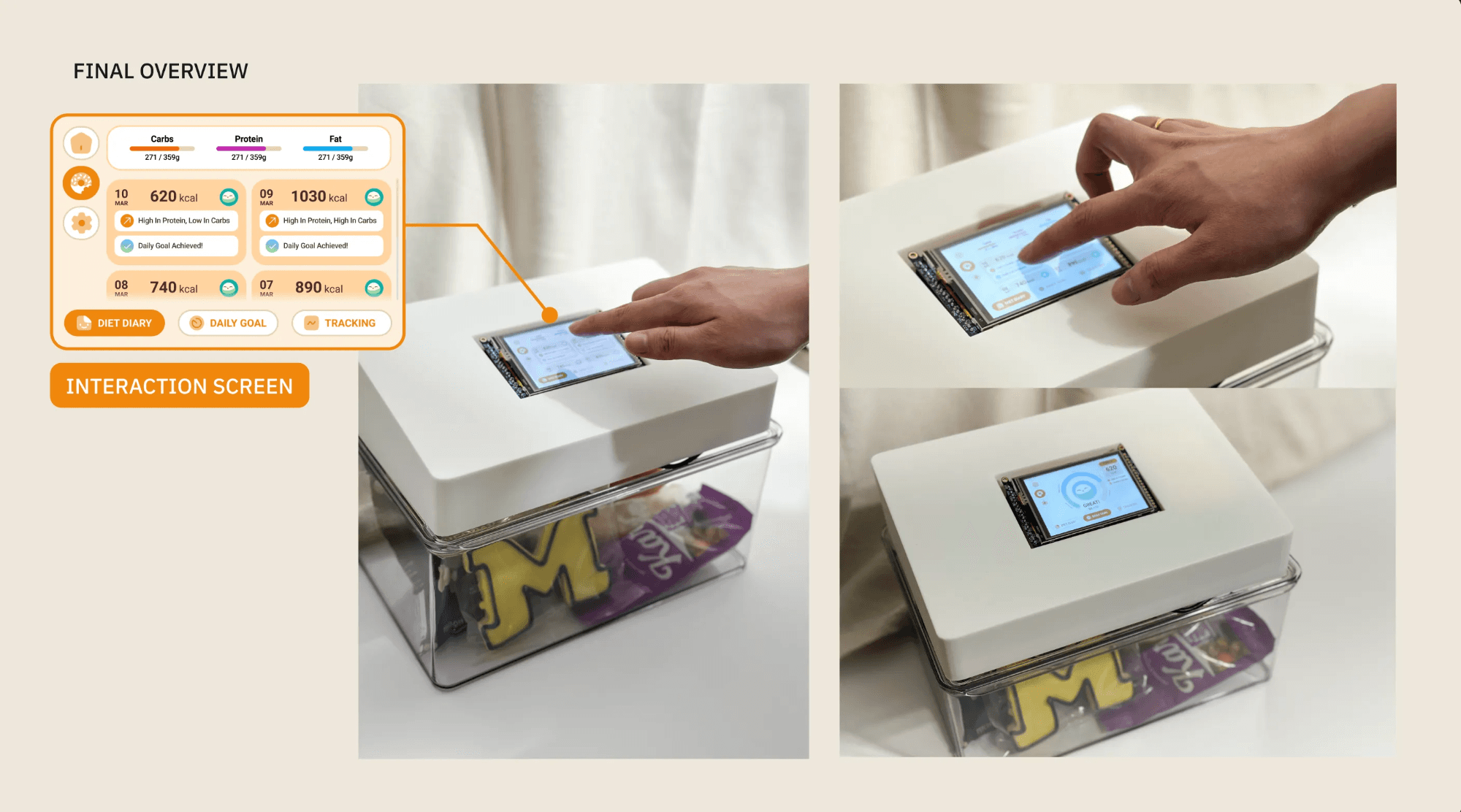
Users are able to interact with the screen on the Smart Snack Box
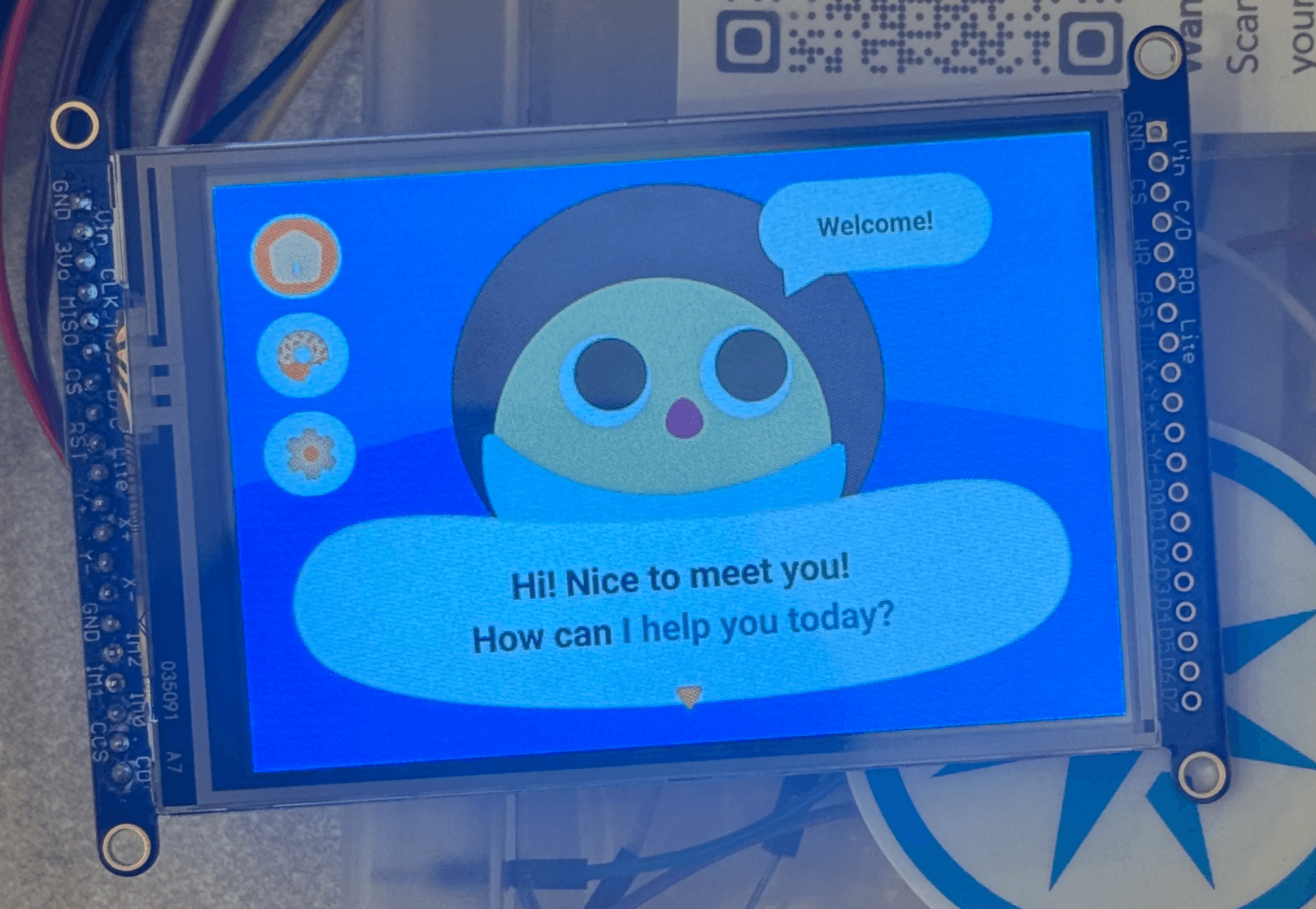
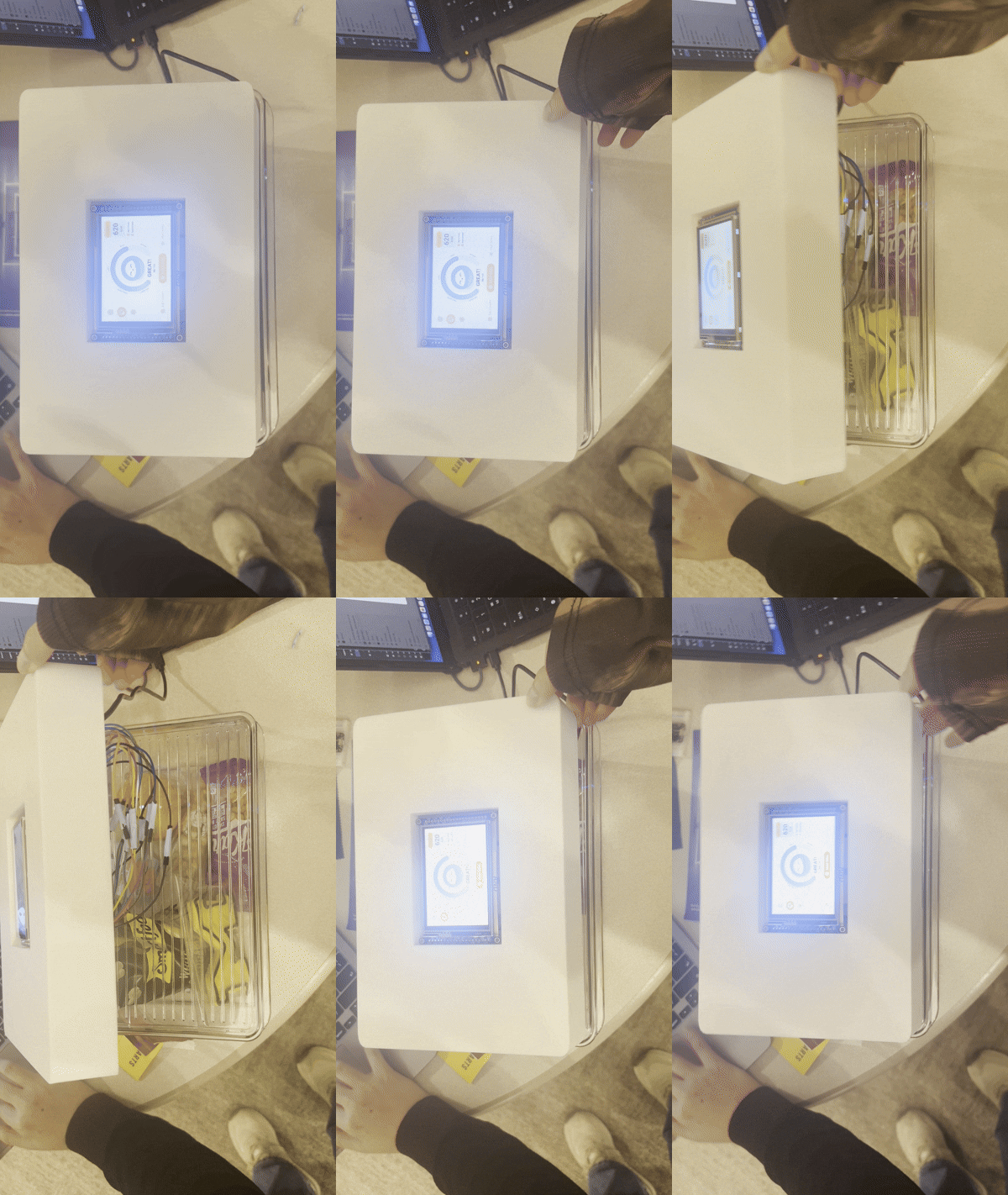
UI frames brought to life on an Arduino-powered LED display
Formative Study
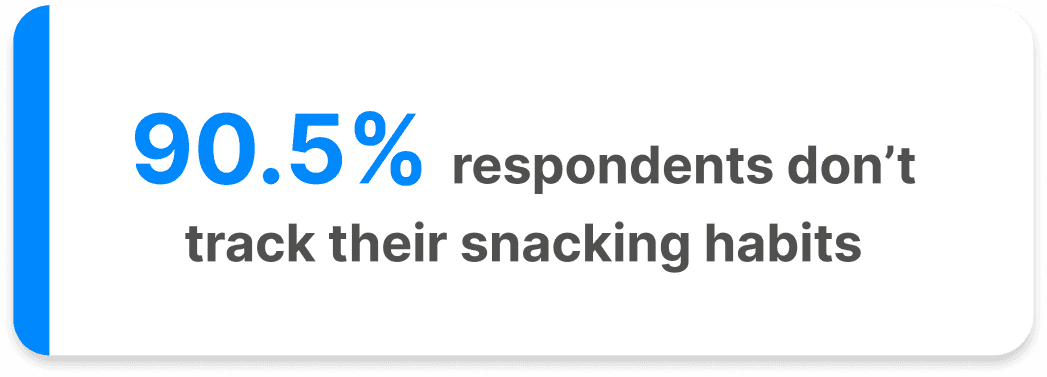
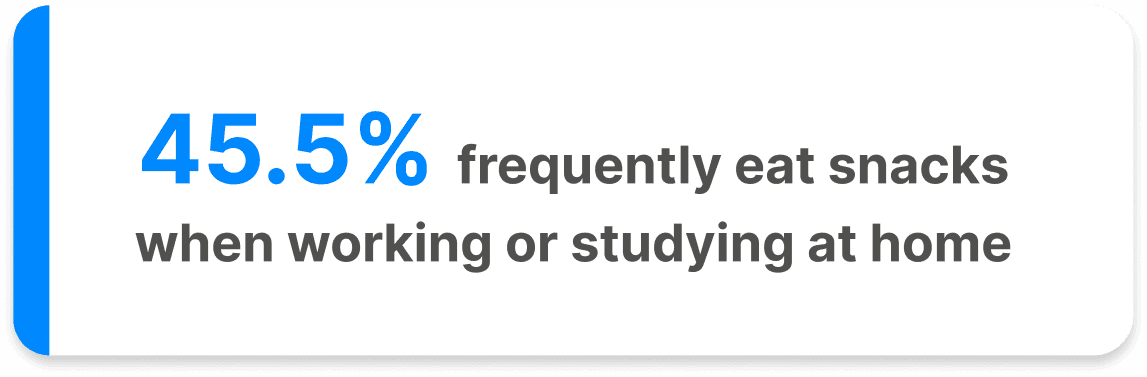
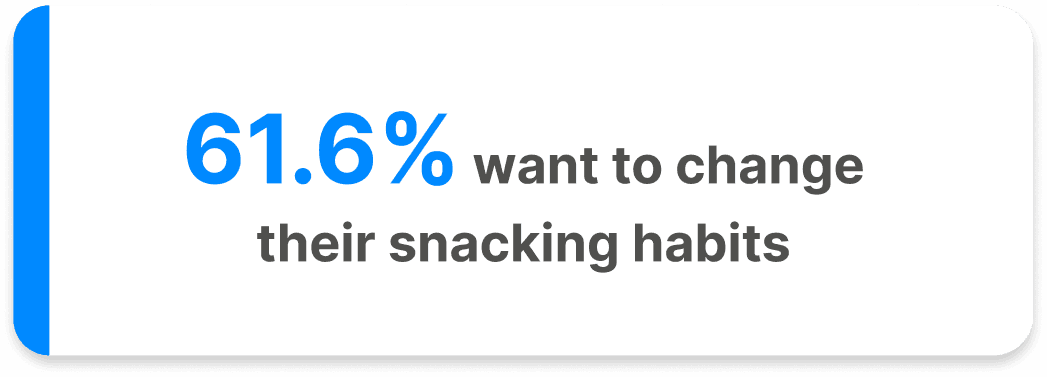
Using diary studies, participants were asked to document their snacking habits over several days. Through this, we uncovered that:
Snacking is often driven by stress, boredom, or fatigue, rather than actual hunger
The availability and visibility of snacks strongly influenced how often people snacked
Most participants didn’t plan their snack intake and often ate more than intended, highlighting a lack of portion control or routine awareness
Affinity Diagram
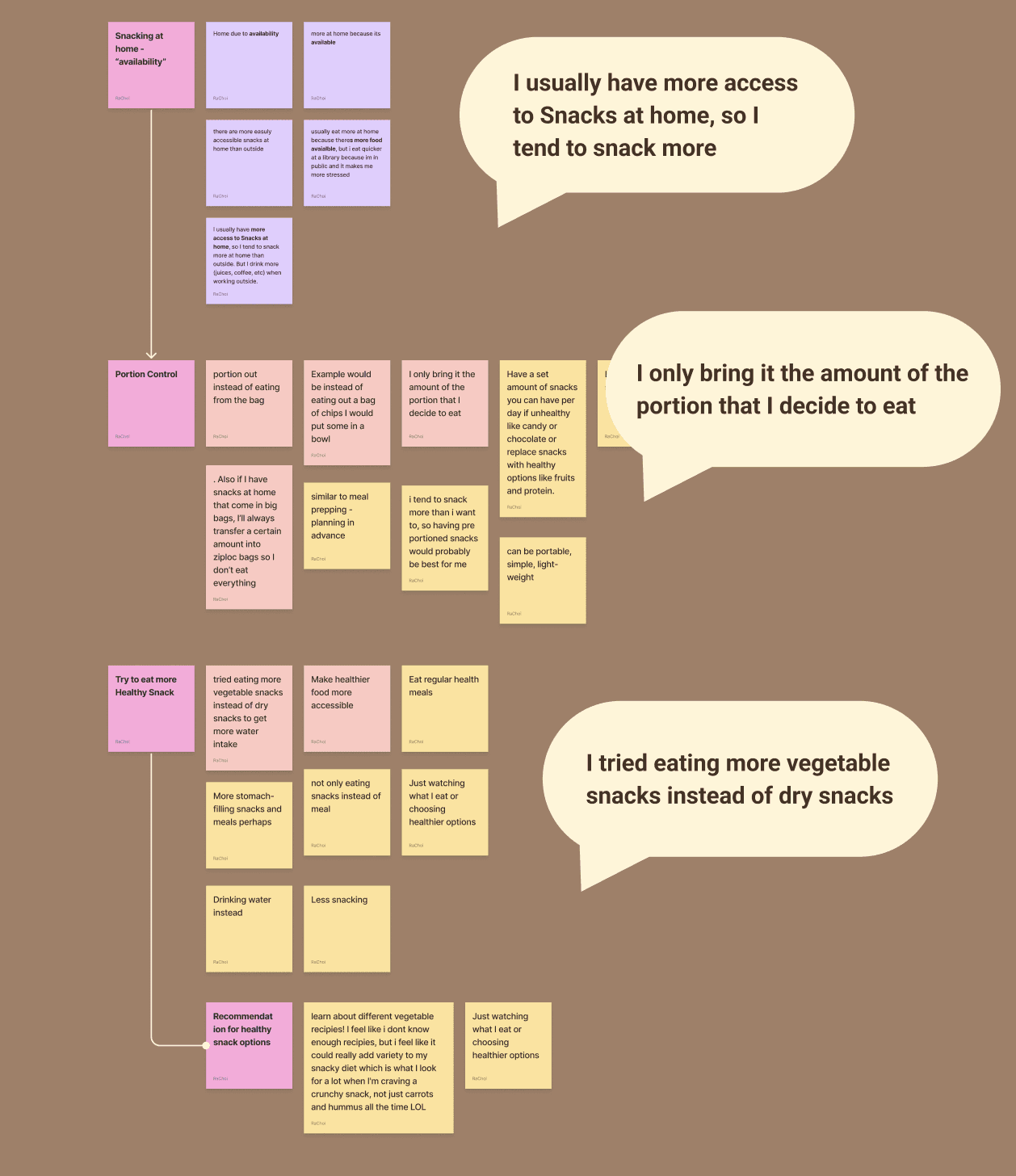
Our team created an affinity map to identify the main themes that directed our product:
Users snack more often when snacks are visible and easily accessible
Many users rely on portion control to try to manage their eating habits
Users prefer healthier options but often choose less healthy snacks due to decision fatigue
Users want more awareness of their snacking patterns and behavior
User Journey
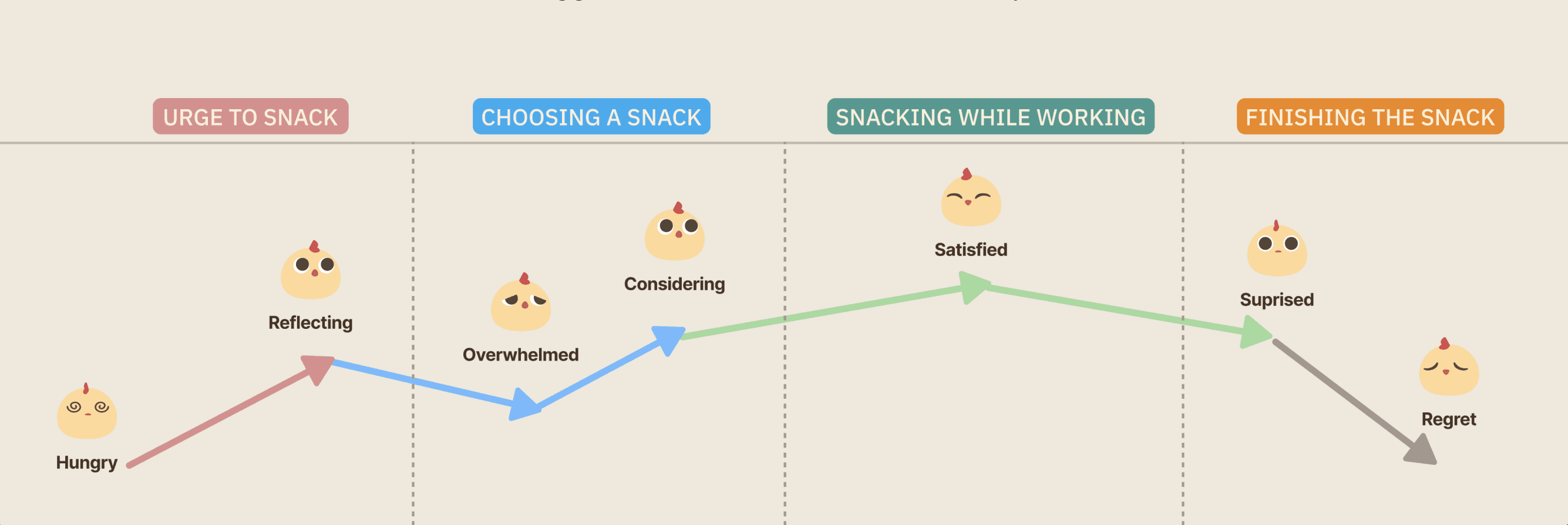
I mapped key points across the snack experience: from the urge to snack, to choosing a snack, snacking during tasks, and reflecting afterward. We identified four design opportunities:
Reduce user effort trough visual cues
Provide convenience through portion & snack suggestions
Use gentle nudges to reduce impulse & overconsumption
Adapt to different user environments
Experience Prototype
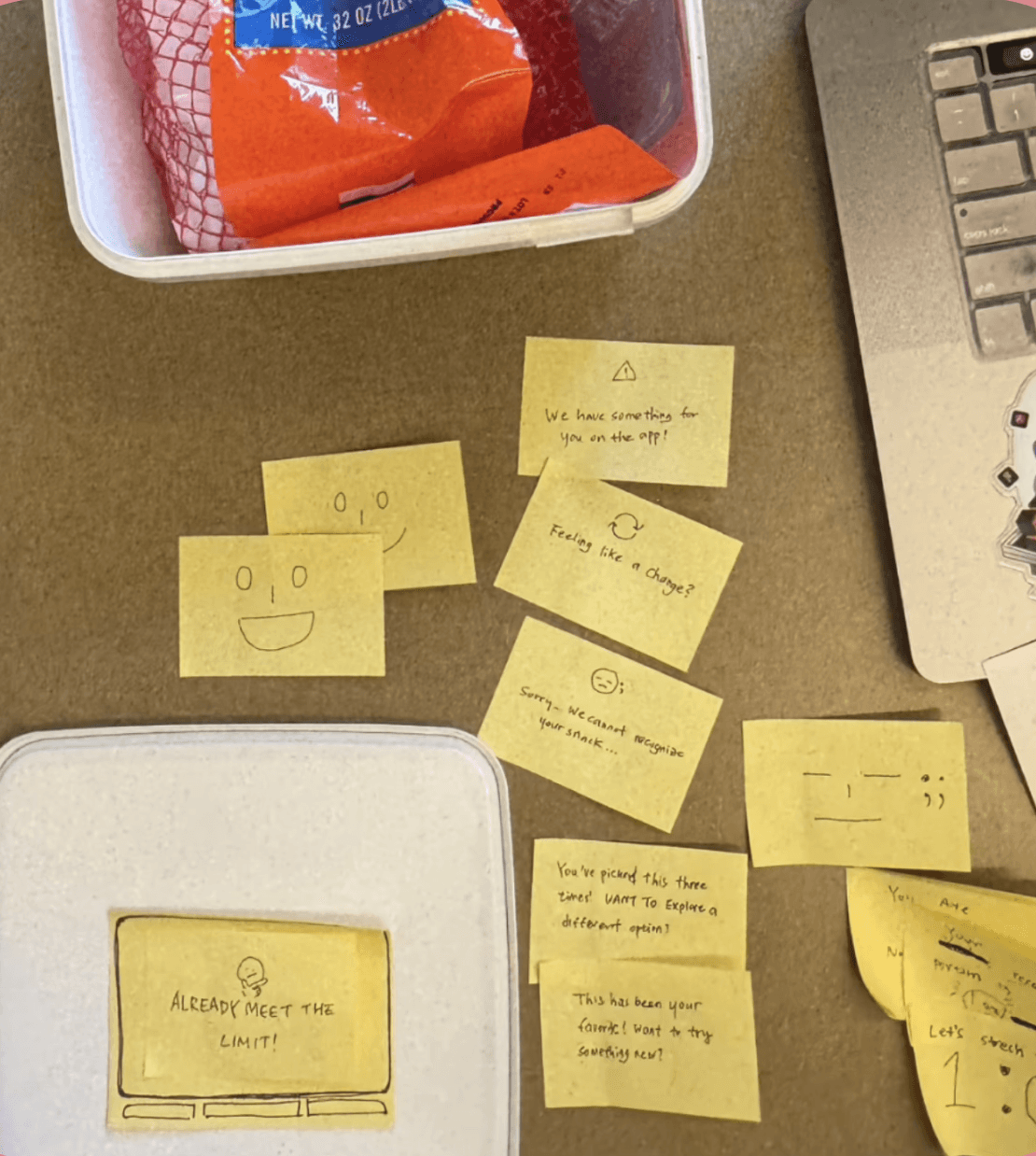
We built a functional Smart Snack Box prototype with a snack buddy, passive sensors, personalized feedback, and goal setting, then tested it using user enactments in real-world scenarios like working from home and late-night snacking
Prototype Development
Our prototype focused on three core interactions:
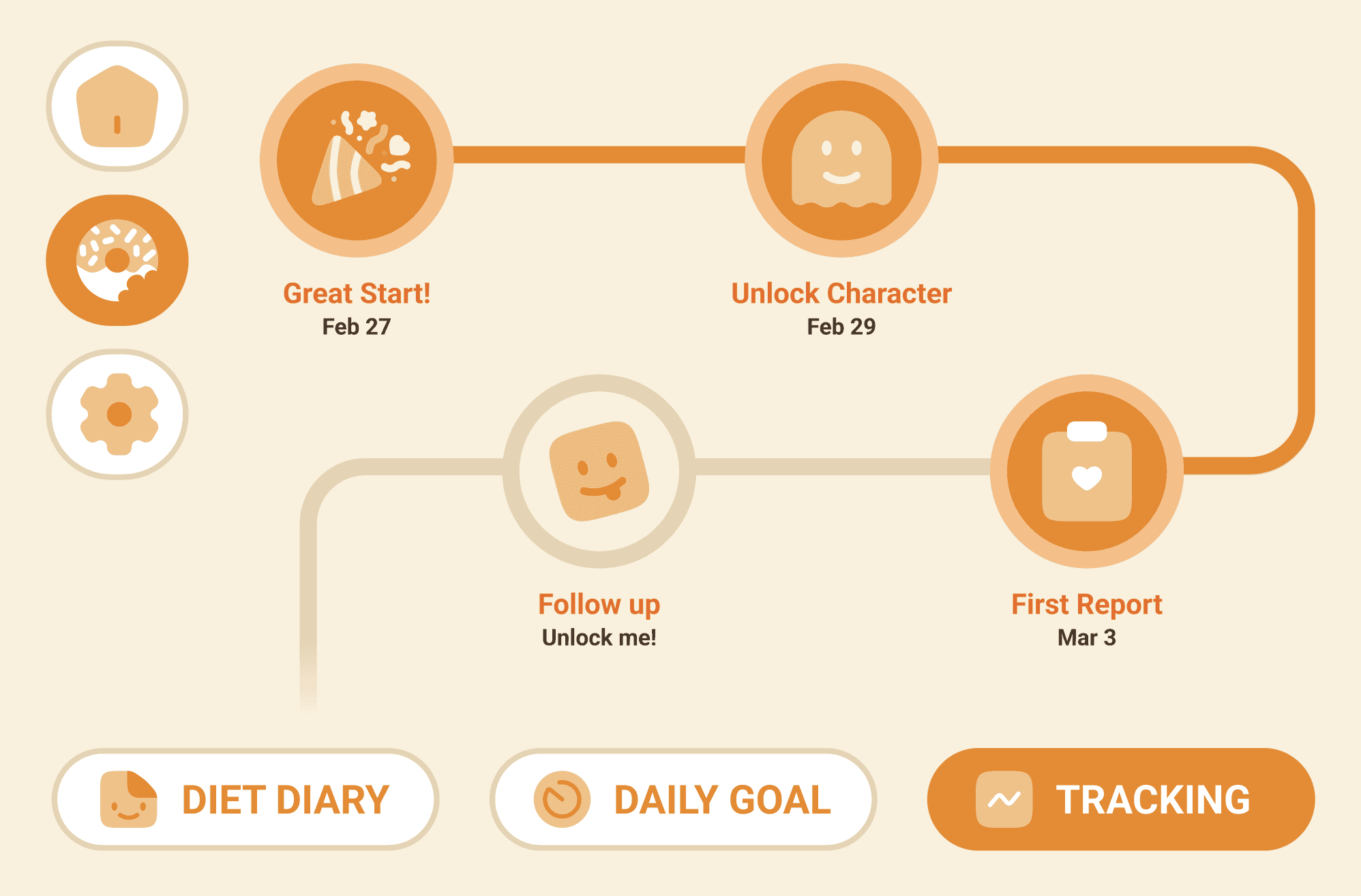
The onboarding sequence, including snack style selection and buddy naming
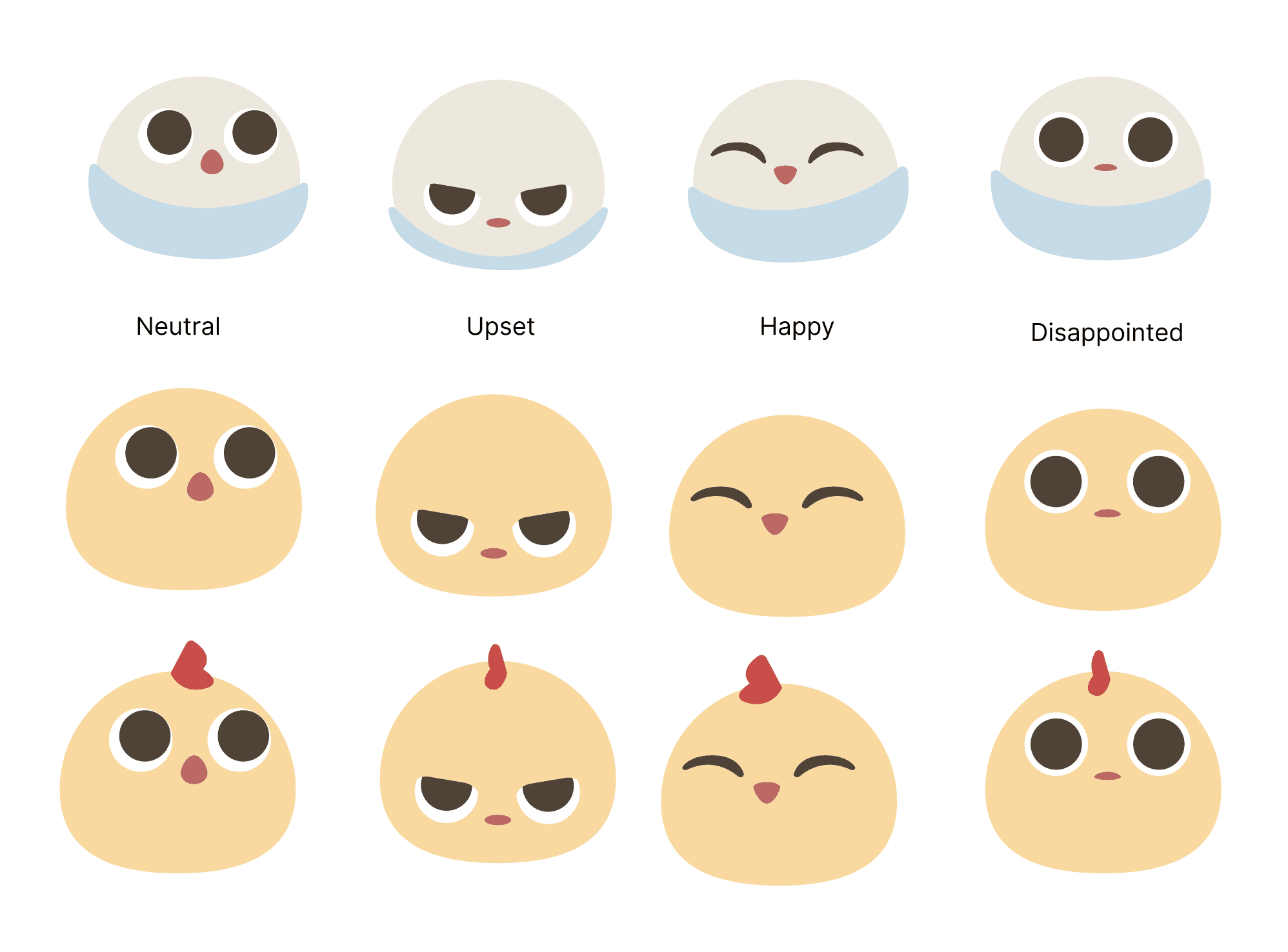
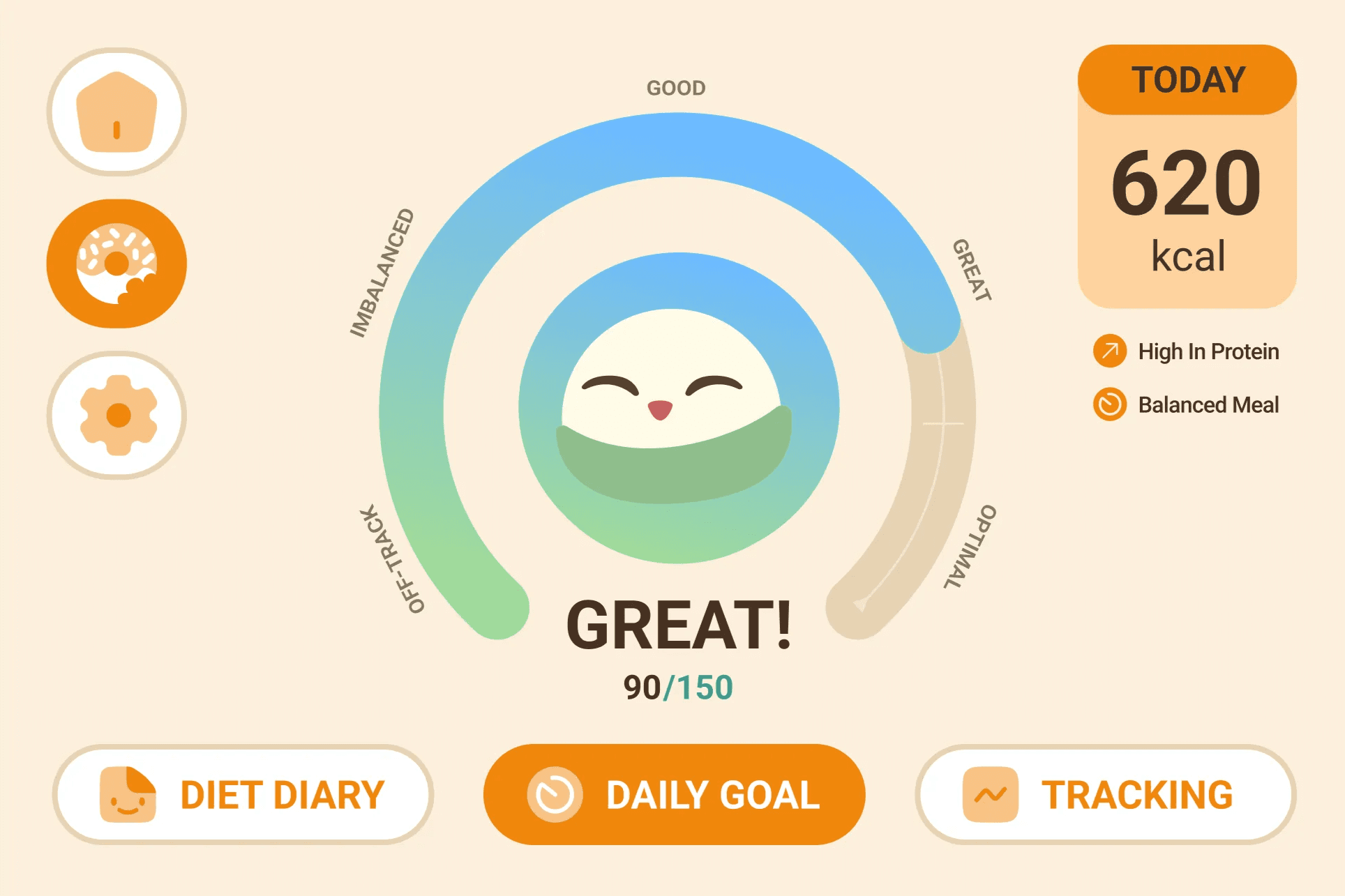
Real-time feedback displaying how the box encourages or cautions users
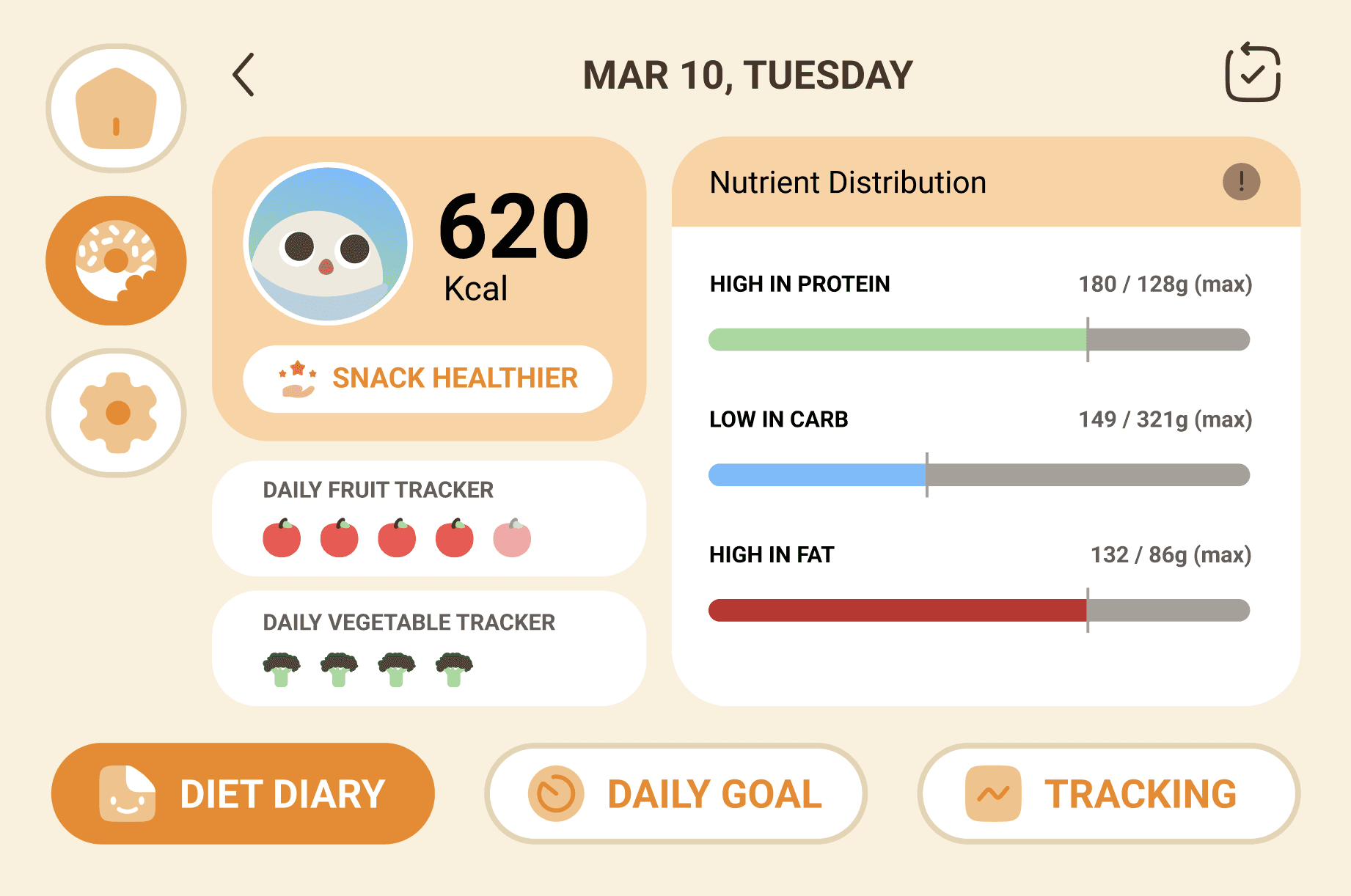
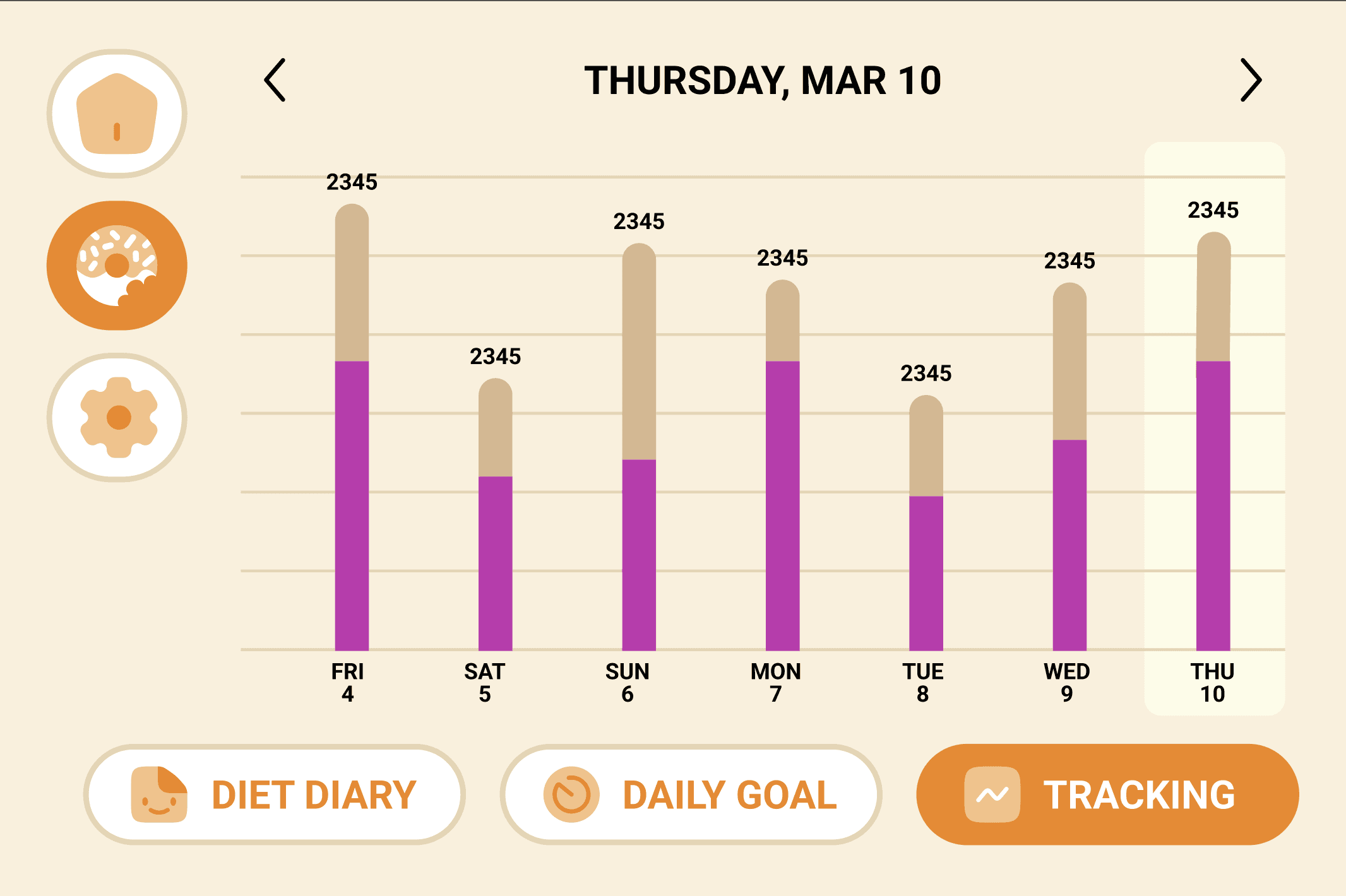
Daily progress dashboard, which visualizes nutrition goals and personal achievements
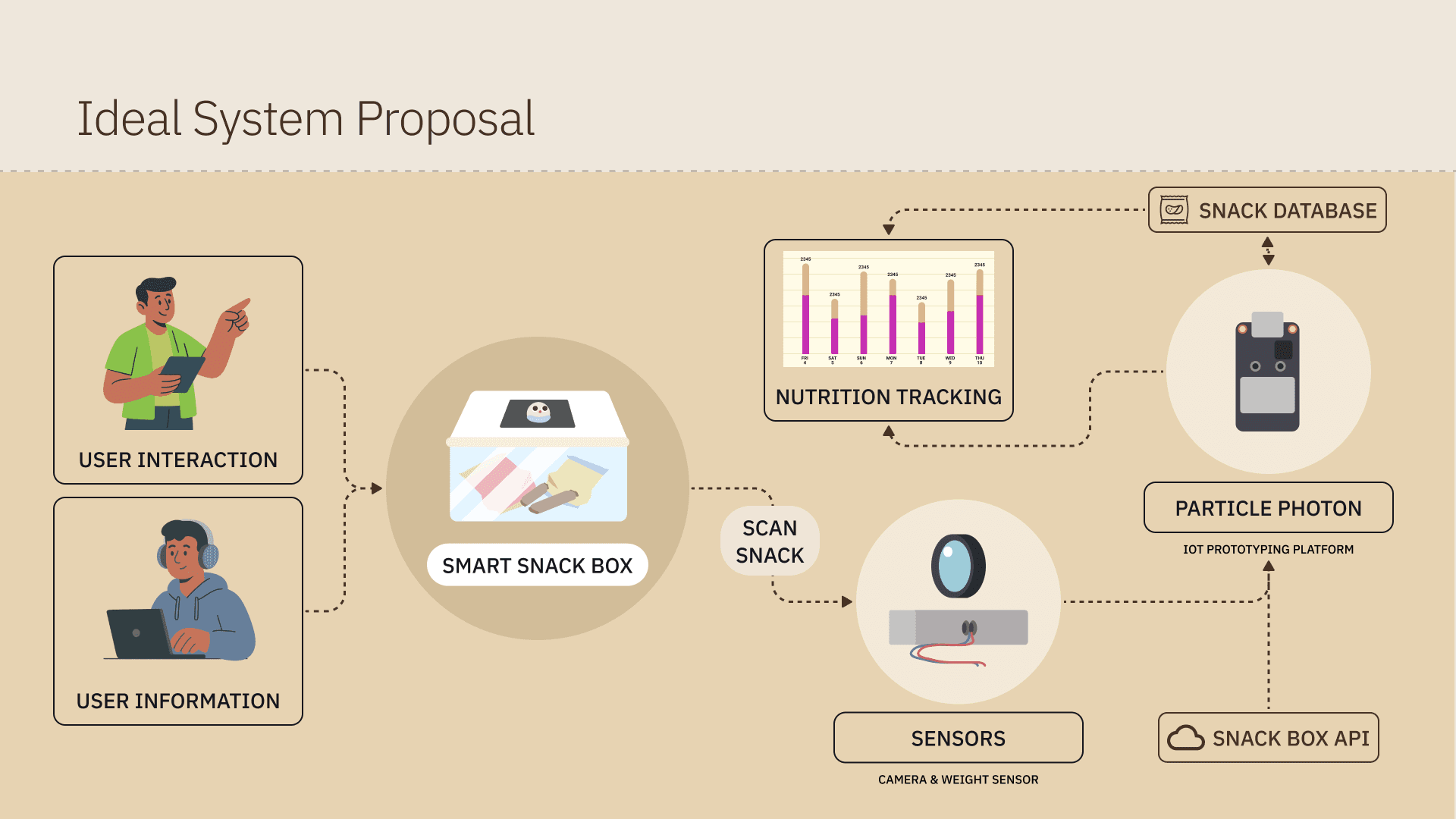
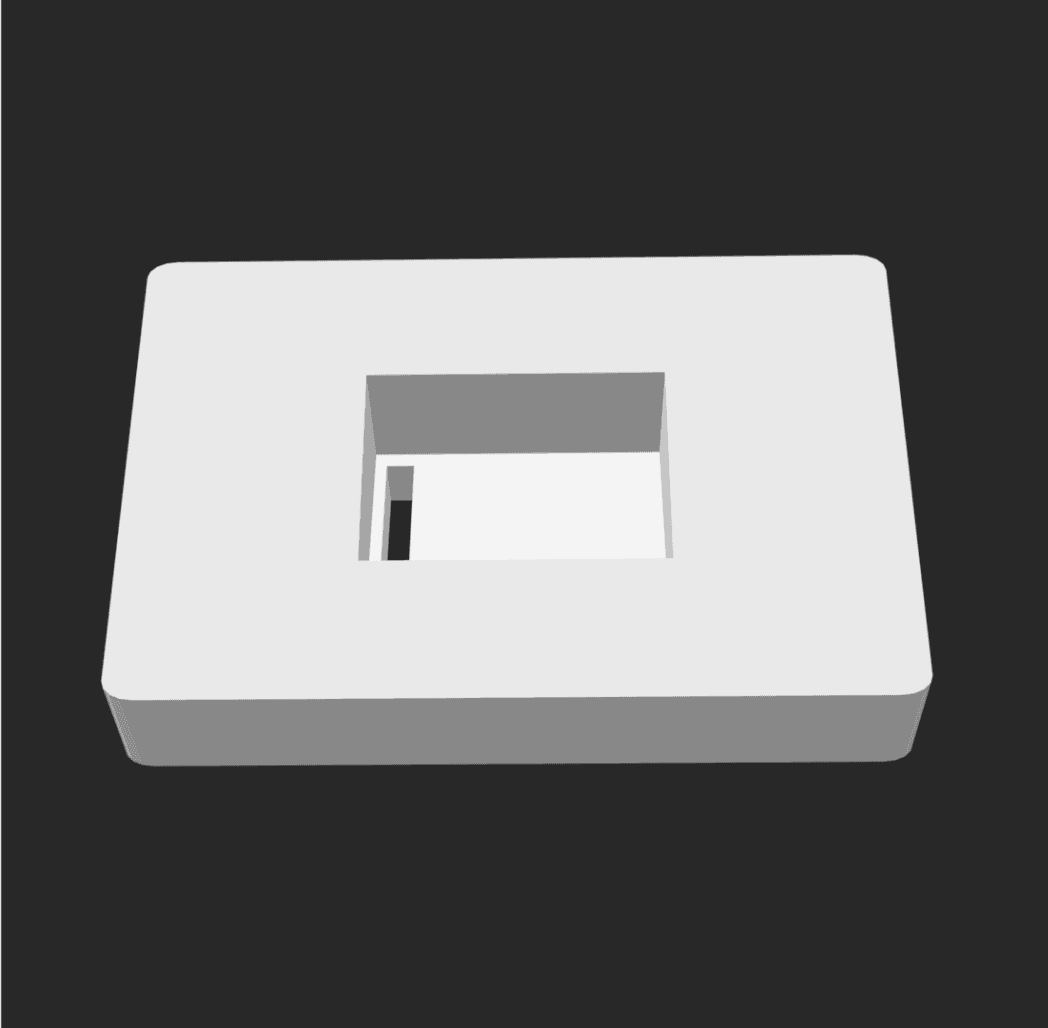
These were designed and tested using a screen-based simulation to reflect what the final IoT-integrated system might feel like.

Final System Concepts
Playful cues, such as facial expressions & visual nudges, combined with passive weight-sensor tracking were perceived as less intrusive and more sustainable for long-term use than manual logging.




Results
Our team created a prototype that not only addresses the gaps in existing habit-tracking tools but also introduces a playful, supportive experience that users want to engage with. Smart Snack Box was recognized with Most Innovative Product award, affirming that our research, interaction design, and technology that delivers a compelling solution to a real user need.

Key Learnings
I found that users prefer subtle, ambient feedback over directive prompts and want a system that tracks habits with minimal manual input, leading us to prioritize passive tracking and simple visuals. I've also identified accessibility needs such as alternative interaction modes, inclusive feedback (audio/haptic), and improved visual contrast, which would be essential in future iterations.
Constraints & Next Steps
Our product shows promise but is limited by simulated sensing, reliance on self-reported personalization, and hardware constraints that prevented full validation of weight and visual tracking. I would like to expand testing to more target users, supporting non-packaged snacks with low-effort input (voice, camera assistance), exploring mobile or voice companion options, and working with developers to test real emotion tracking and more seamless passive feedback.